Coca-Cola in La Calera: Water Exploitation Curtailed Through Social Resistance
Despite threats and harassment, leaders and organizations achieved a historic milestone in La Calera that prioritizes human water consumption over the local Coca-Cola bottling business. Now they’re asking for guarantees.
8 de julio de 2026
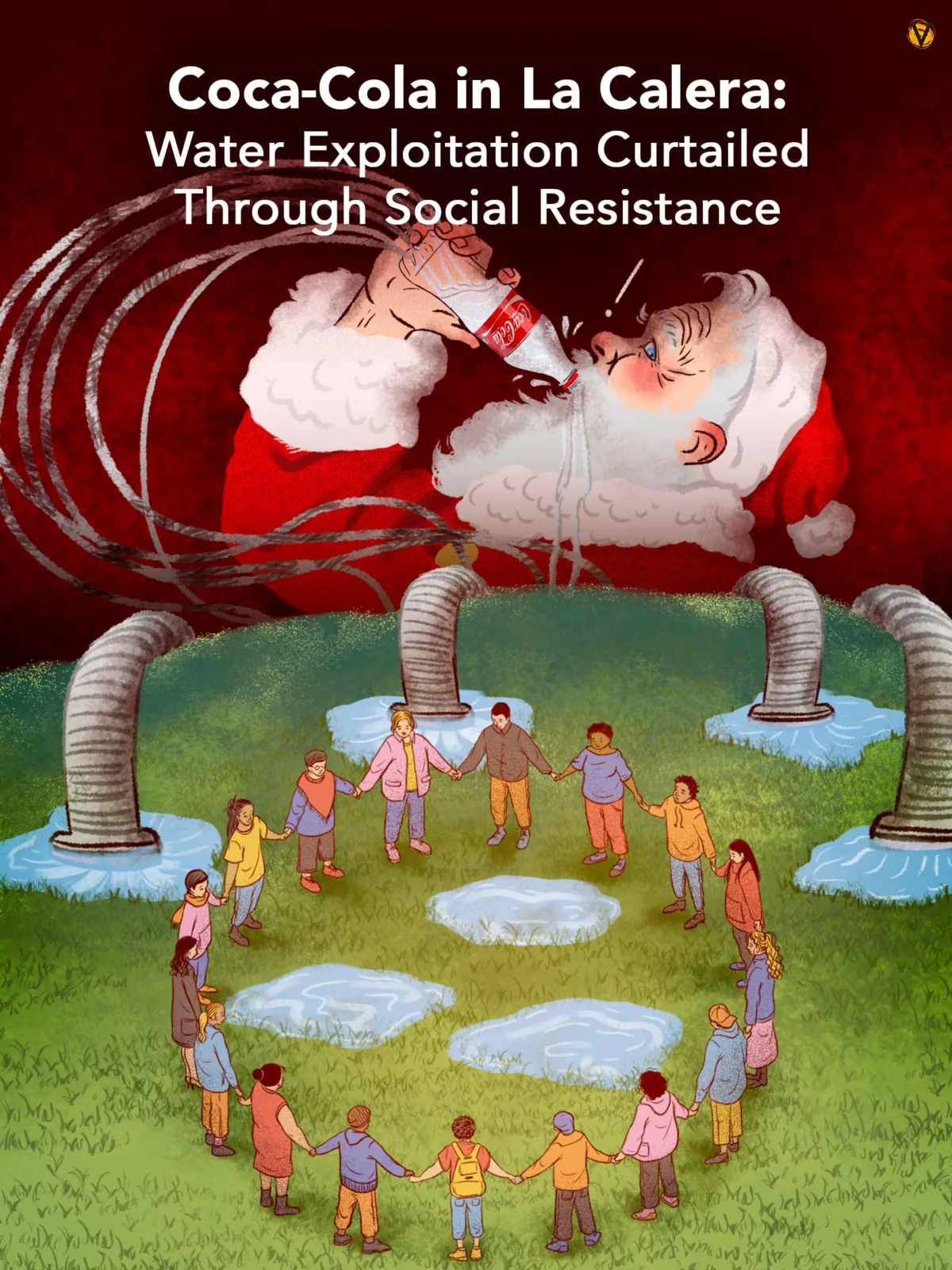
Environmental leaders in the municipality of La Calera (Cundinamarca) are confident that they made history. On April 14, the Regional Autonomous Corporation of Cundinamarca (CAR, for its Spanish acronym) imposed several limits on Coca Cola’s extraction of water from natural springs in the municipality. The decision came after a process filled with protests, threats, and opposition from powerful sectors advocating for the multinational.
Initial concern from local leaders who defend La Calera’s water began during the 2024 drought. Around that time, the municipal water authority began forced rationing and several rural areas watched as water flow in locals streams dwindled. Strangely enough, there was no water shortage in the Santa Helena area where Coca-Cola operates their Manantial brand bottling plant. Meanwhile, farmers were forced to purchase the liquid.
In that context, Journalist Carlos Hernández Osorio published a report in VORÁGINE on the water paradox in La Calera. In his article, the reporter revealed the amount the multinational paid in 2016 to bottle 56.6 million liters: $607,501 COP. The discovery caused an uproar in public opinion.
“[The inhabitants of the municipality] realized that bottling companies like Indega (Coca-Cola) continued bottling despite rationing. “Furthermore, they realized that the company’s concession was due to expire in 2024, and that a 10-year renewal had been requested,” Yessika Hoyos, from the José Álvear Restrepo Lawyers Collective (CAJAR), told VORÁGINE.
Participation in Spite of Stigmas
With the CAR responsible for either renewing or cancelling the concession, environmental leaders and social organizations began to get involved in the process. One of the first spaces in which they participated was a visit from Alfred Ballesteros, director of the CAR (Cundinamarca), to the Buenos Aires village in La Calera. Herminia Cristancho from the Municipal Environmental Oversight Committee told VORÁGINE that during the encounter they began to feel a certain hostility towards those who opposed the concession.
Ms. Cristancho said that several people in the town insulted her; 72 residents from the municipality are Coca-Cola employees. “The company created an image of us as an unwelcome actor who had no right to be interfering,” said Lina Preciado, an environmental leader from La Calera. However, she and other social organizations became third-party interveners, meaning that the CAR would take their positions into account when studying the case for extending or terminating the concession.
Leaders and organizations began training with this process in mind. “Between 2024 and 2026 we met every two weeks in workshops on cartography, hydrogeology, stakeholder mapping, advocacy, communications… It cost us quite a bit; in fact it was a lot of work,” Cristancho recalled. In addition, they divided the study of the voluminous concession file among several people and met periodically to share their findings.
“They realized, among many other irregularities, that the CAR had allowed Indega (Coca-Cola) to bottle for several years without renewing their license. “The company had even been sanctioned,” Hoyos said.
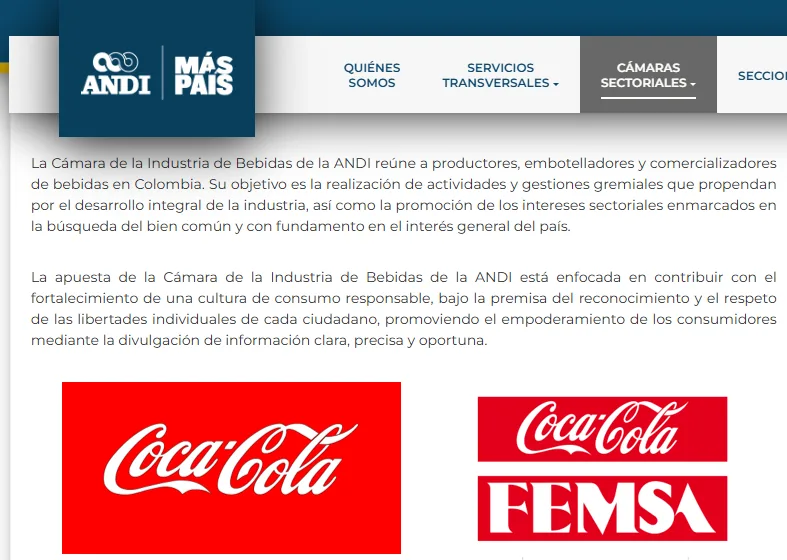
Powerful sectors began to align themselves with Coca-Cola’s positions, including the National Association of Businessmen of Colombia (ANDI), who entered as a third intervenor through the National Center for Water and Biodiversity. According to the ANDI website, Coca-Cola is a member of the association’s Beverage Industry Chamber, an entity in charge of lobbying in favor of member interests.
There were those who resorted to violent methods to quell the enthusiasm for participating and studying. On March 27, 2025, councilperson Javier Cifuentes was on the banks of the Teusacá River when he was approached by a hooded man. “He threatened me and told me to stop meddling, that I had no idea who I was messing with and that if I kept it up, they were going to ‘kill’ me and my family,” stated Cifuentes in an interview with this media outlet. The council member had also been recognized as an intervening third party opposed the extension of the concession.
Despite the attacks, organizations and leaders continued demanding to be heard, which led the CAR to organize an event in which all recognized actors in the process would have a chance to speak. “For the first time in Colombia’s history, a public hearing was held within the framework of a water concession,” Hoyos explained.
Public Hearings and Digital Harassment
The public hearing to listen to all parties was scheduled for May 15, 2025. The day before the meeting, Brigitte Baptiste, rector of Universidad EAN, published a column in the La República newspaper in which she cast doubt on the leadership that opposed the extension of the concession: “Technical studies by the CAR and third parties from outside the activity corroborate this, but it seems that certain sectors of public opinion, duly financed, have in their reputational sights those who must independently make the best decisions and, taking advantage of a scandal with little detailed study, they publicly shame them.”
The cloud of negativity engulfing social leaders and organizations was also evident at the meeting. “It was a very complex public hearing; Coca-Cola brought in many of its workers not only from La Calera, but from different parts of the country. “They started whistling and mistreating the leaders who were questioning the concession,” Hoyos said. “Every time we intervened, they blew vuvuzelas to silence us (…) They also started distributing pamphlets criticizing Herminia Cristancho and Javier Cifuentes, speaking ill of both actors,” Preciado said.
Despite the hostility, the leaders and organizations explained the reasons why they questioned the concession; mainly, the scarcity of water for human consumption during times of drought, while the company continued bottling without obstructions.
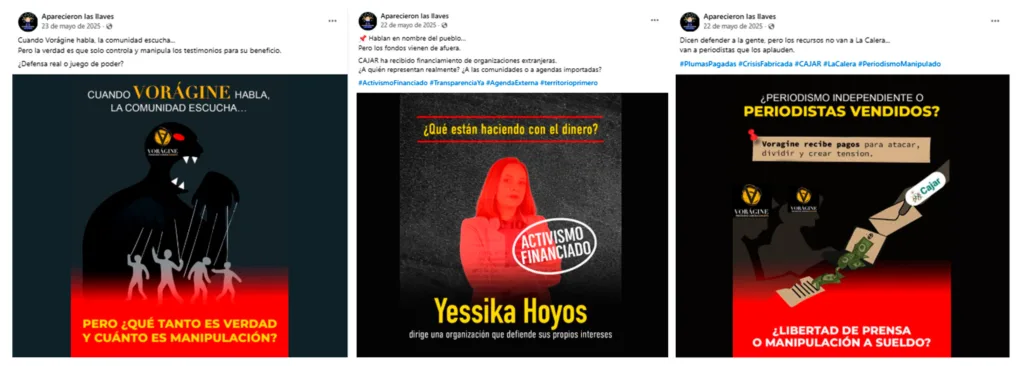
The advances made in terms of participation came at a high cost to the leaders; following the public hearing, a digital harassment campaign began. On May 12, 2025, a Facebook page was created with the username “Aparecieron las llaves” (“The Keys Turned Up)” which at the end of the month began slandering VORÁGINE, the CAJAR, and Councilperson Cifuentes. The campaign used content that paid Meta for advertising. The ads on the page were associated with the phone number 314 217 04 47.
Other Findings
The eyes of the media, politicians, experts, leaders, and others remained on the La Calera case as the CAR continued studying the file in order to come to a decision. Meanwhile, other relevant facts came to light.
For example, on August 17, 2025, Representative María del Mar Pizarro revealed that Coca-Cola had covered several springs with cement. The company claimed they were “masonry boxes” that met the legal specifications.
In addition to the above, the multinational presented the CAR with a “technical” study seeking to reinforce their arguments for an extension of the concession. VORÁGINE revealed that one of the concepts in this study included several inconsistencies. Among other points, the analysis claimed that some of the findings were unreliable and noted that data had been included that altered the final results of water availability in the area.
Leaders and organizations were up against the world’s largest bottler of sugary drinks. This, from the outset, created inequalities in the process. While Coca-Cola had the means to hire companies to conduct studies to support its vision, resources on the other side were limited. “Technical knowledge is privileged over the knowledge of the community and peasants in the territory. Although the people were saying, “Ma’am, there is no water,” the response was “Sorry, this is a technical discussion,” Palacios explained.
Local leaders secured allies in different organizations that contributed their technical expertise. Then, with all viewpoints on the table, the CAR had to decide.
Ruling and Renewed Harassment
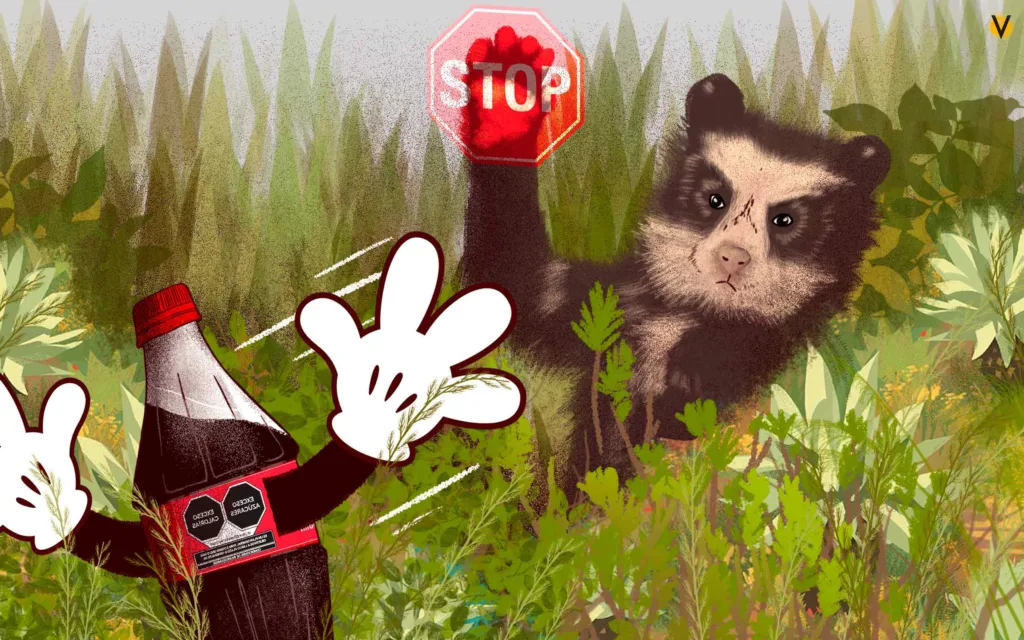
Almost a year went by from the time of the public hearing until the CAR reached a final decision; meanwhile, Coca-Cola continued bottling. On April 14, 2026, the CAR issued a resolution extending the concession, but establishing several changes. For example, the multinational will now only be able to draw water from four springs, as opposed to the seven formerly at its disposal. In addition, the permitted flow rate was reduced from 3.4 to 1.9 liters per second. The company will have to purchase 53.46 hectares of land to be set aside for the conservation of ecosystems and, in case of drought or events that affect the communities’ water supply, the company will have to cease extraction.
Those involved in the process have interpreted the ruling in different ways. Cifuentes, a member of the Muisca community, described the decision as “Solomonic,” explaining that “none of the actors felt that it was a very strong decision. For the first time, an organized community was able to ensure that a concession included restrictions, so, for us, that’s a very big step forward,” he said. But he added that his goal was to put an end to the concession and, therefore, he is considering requesting an annulment of the resolution. “The CAR does not contemplate a biocentric vision; it’s not just human beings who drink water. Water is everything and we’re talking about a complex system of interdependencies in which streams and springs also have rights,” he said.
“The most important thing about this process is that the community understand that anyone can actively monitor how our natural resources are being managed. Not only we, but future generations as well depend on them,” Hoyos emphasized. He also pointed out that although the company’s right to bottle water was unaffected by the decision, it must now comply with several compensatory measures.
Palacios also gave his assessment: “We were requesting that the entire concession not be extended and it was partially extended, but the flow was reduced. That’s a practical victory in protecting the three springs that were freed from the company’s commodification.” He continued by emphasizing: “My colleagues and I came away from this process with a real education in terms of what a State decision regarding nature entails.”
This knowledge, the milestones and achievements derived of the process, are now part of the wealth of environmental leaders in La Calera. However, they still have concerns about their safety. For the first time, Cifuentes revealed to a media outlet that his security detail has been intercepted by motorcycles on several occasions.
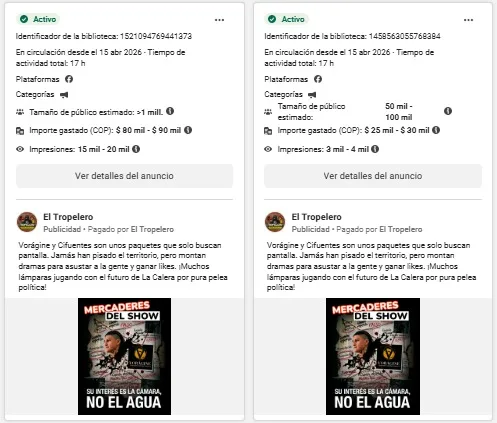
And the digital harassment was reactivated. On April 15, one day after the resolution was issued, an account by the name of El Tropelero paid for two ads to circulate written pieces attacking VORÁGINE and Cifuentes personally. The account is associated with the phone number 323 857 5361 and the same images in it were used and promoted by a profile called “Está en la olla” (“In a Bad Way”). Both pages are managed by the same IP address, a unique identifying address for computers connected to the internet.
It is the State’s duty to protect the life and processes in La Calera; it is important to identify and prosecute those responsible for the violent acts that have occurred in order to guarantee safe spaces in which institutions can resolve conflicts. This is especially important in a country where the persecution of environmental defenders has cost hundreds of lives.
If you would like to share more information with us on this or other topics, please write to: [email protected]
* This content is funded by support provided, in part, by Vital Strategies. Content is editorially independent and its purpose is to shine a light on both the food and beverage industry illegal or unethical practices and the Colombian most vulnerable populations, who disproportionately bear the brunt of the global health crisis resulting from the unhealthy food and beverages consumption. Unless otherwise stated, all statements and materials posted on this article, including any statements regarding specific legislation, reflect the views of the individual contributors and not those of Vital Strategies.

Somos un medio digital independiente que nació el 1 de junio de 2020 para investigar y contar historias relacionadas con la vulneración de los derechos humanos y la corrupción en cualquier nivel, público o privado. Creemos que el periodismo es contrapoder o no puede llamarse periodismo, y le apostamos a las narraciones de largo aliento, las ilustraciones y el cómic periodístico. Si tienes una historia que compartirnos, escríbenos a [email protected]
Artículos Recientes
VORÁGINE fue a la finca donde una comunidad denunció una ejecución extrajudicial a manos del Ejército. Un testigo asegura que el hombre fue rematado...
El congresista busca tumbar los impuestos a los ultraprocesados y recibió una donación de una fundación asociada a los azucareros. Por su parte, el...
El presidente de la Espriella sacó a Colombia de la Coalición por la Igualdad de Derechos el mismo día del asesinato de una lideresa trans. Según datos...
Coca-Cola has sponsored the Olympic Games since 1928 and the FIFA World Cup since 1978. Profit and “image-washing” efforts aimed at diverting attention...