Briceño and the Interests Behind the Offensive Against “Healthy” Taxes
The congressman seeking to overturn taxes on ultra-processed foods received a donation from a foundation with links to sugar producers. Meanwhile, the De La Espriella administration has revived special loans for sugarcane and palm growers.
19 de octubre de 2026
Por: Nicolás Sánchez
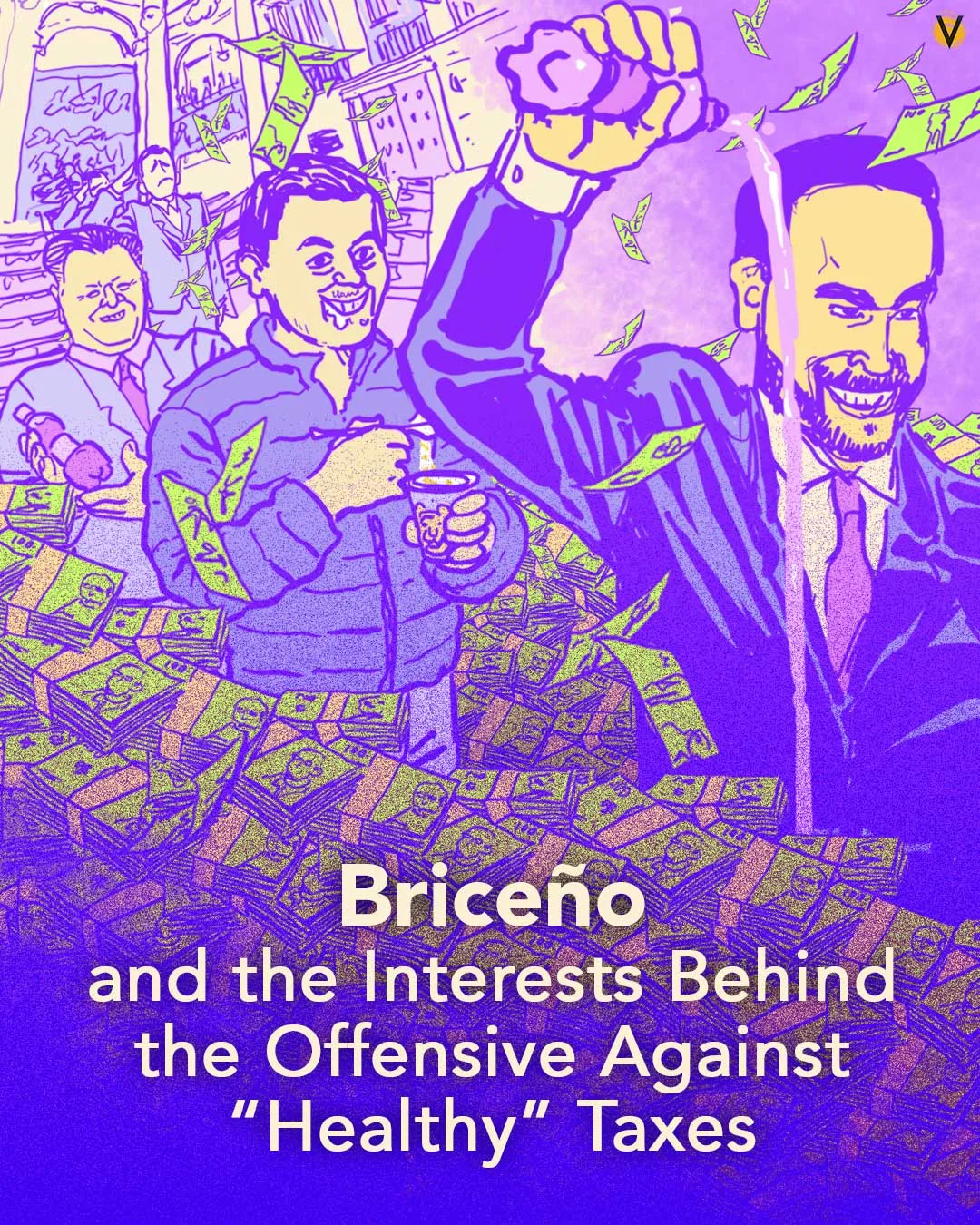
“You will always see me defending the country’s productive sector in Congress—and for free,” tweeted Daniel Briceño, a representative in the House of Representatives for the Centro Democrático party. Despite his emphatic words, his campaign received a million-dollar donation linked to a sector with significant stakes in the bill Briceño is promoting to eliminate taxes on ultra-processed products that, according to extensive scientific evidence, harm consumers’ health.
Briceño is one of the visible faces of the powers working to fulfill the desires of the sugar, ultra-processed food, and sugary beverage industries. For 10 years, these corporations have focused their influence in Colombia on blocking the so-called “healthy” taxes. In 2022, when enactment of these taxes became irreversible, lobbyists focused on weakening them. Now, with the new Congress and under Abelardo de la Espriella’s administration, they have regained power and are bent on eliminating these taxes in order to increase consumption of their products.
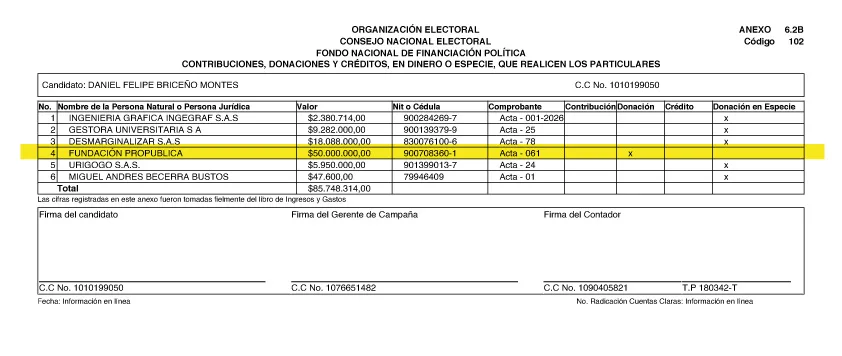
The contribution received by Briceño came from ProPública, a foundation linked to the Echavarría family (owners of Corona) and the Eder Garcés family (powerful sugar magnates). ProPública was the representative’s largest campaign donor, contributing 50 million pesos.
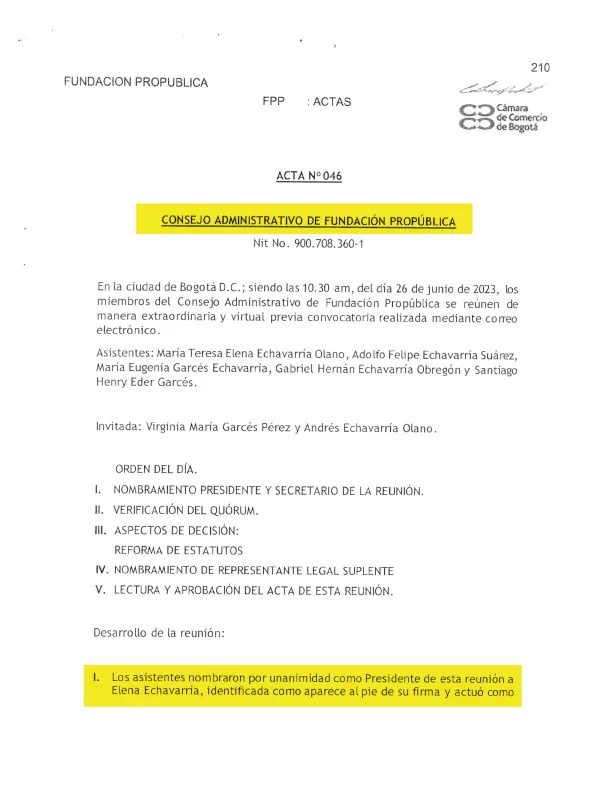
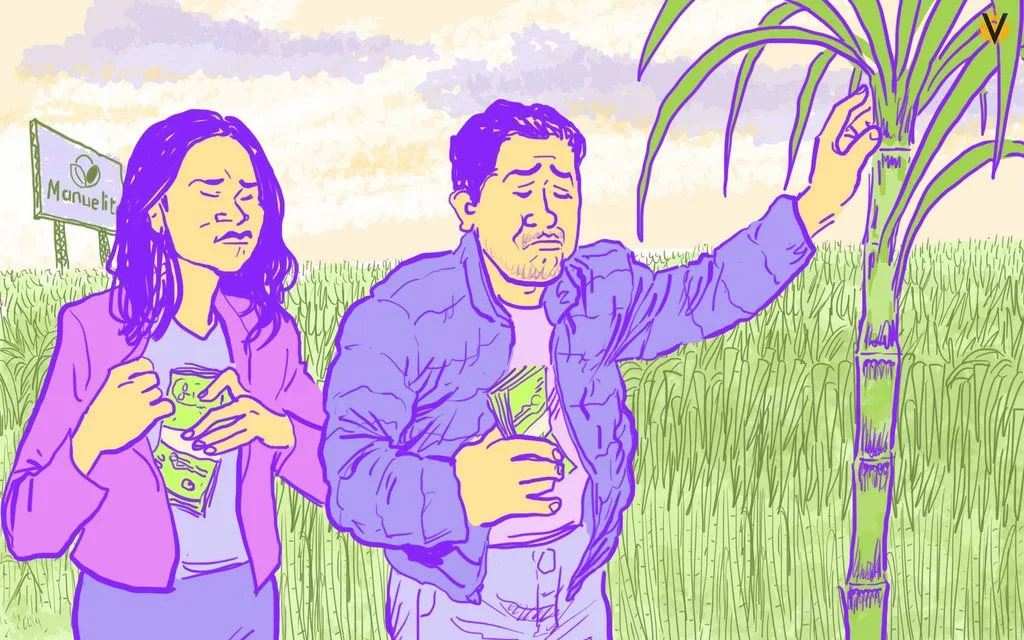
The Eder Garcés family owns the Ingenio Manuelita sugar mill and wields influence within ProPública: Santiago Eder Garcés has been a member of the foundation’s Administrative Council since 2014. The family’s influence within the foundation expanded in April 2026, when Enrique Jaime Eder Garcés was appointed to the Board of Directors. Both are brothers of Cali’s mayor, Alejandro Eder.
Briceño’s close ties to the sugar industry are also apparent in the fact that on August 26, 2026, he began writing columns for the La República newspaper. This date is significant because it came just one day after the representative posted a video alongside Congresswoman Carol Borda, announcing that they would introduce a bill to eliminate taxes on ultra-processed foods and sugary drinks. The media outlet in question is owned by the Ardila Lülle Organization, an economic conglomerate that has lobbied against this public health measure and owns the Ingenio Providencia sugar mill and the RCN media network.
A few days after Briceño launched his new platform, he welcomed one of the most powerful figures in the sugar industry to his office: on September 1, Claudia Ximena Calero visited him in Congress. Calero is the president of Asocaña, the trade association that brings together the major sugar industry executives.
When we asked Briceño about these facts the congressman said he received the donation from ProPública after his campaign was contacted by Carolina Barbosa, who represented the foundation. “I have spoken with administrative staff at ProPública, but I have had no contact with the Eder Garcés family,” he stated. He also stated that it was La República’s editor-in-chief, Fernando Quijano, who suggested he write a column for the newspaper and that his contributions will be biweekly or, in some cases, weekly. Regarding Calero’s visit to his office, he said it took place after he was unable to attend a luncheon with members of Congress that she had organized: “She told me she had some concerns and was trying to form a bloc of Congressional members to protect Colombian industry. Her first concern was the issue of ‘anti-dumping’ measures (regulations to prevent a product from being sold at prices lower than production costs) for sugar imports from Peru, and her second was ethanol imports from the United States. She did not bring up the issue of taxes on ultra-processed foods.”
We contacted ProPública to find out who decides which politicians to fund. “All decisions related to political contributions are made by the Administrative Council of the ProPública Foundation based on studies and in accordance with campaign finance laws,” Carolina Barbosa replied via email. In other words, the same body of which Santiago Eder Garcés has been a member since 2014.
A Sweet Deal
Another bill seeking to overturn the “healthy” taxes ––introduced by David and Nicolás Barguil from Córdoba–– is further along than the one proposed by Briceño and Carol Borda. This bill has already received a favorable report from the Third Committee of the House of Representatives, a committee formed by the Conservative Party representative from La Guajira, Juan Loretto Gómez.
Members of the Third Committee include Óscar Darío Pérez (Centro Democrático), who received a 50-million-peso donation from ProPública, and Carlos Cuenca Chaux (Cambio Radical), who benefited from a 45-million-peso contribution from Gaseosas Lux, a company belonging to the Ardila Lülle Organization. Colombia’s Supreme Court convicted Cuenca of vote-buying in the Vichada department in 2025, one year before the Ardila Lülle Organization decided to support him.
See also: Santodomingo, Ardila, and Sarmiento Funded a Convicted Vote-Buyer
Another way in which the power of the ultra-processed food industry and sugar producers has influenced politics is through party financing. Between 2018 and 2023, sugar mills invested 14.883 billion pesos in political parties. Among the beneficiaries of this funding were the Centro Democrático, the Partido de la U, the Cambio Radical, the Nuevo Liberalismo, MAIS, and the Liberal and Conservative Parties. Of the 31 members of the Third Committee of the House of Representatives, 20 belong to organizations that have received money from the sugar industry.
Companies from the sugary beverage industry have also invested billions in political parties. Between 2018 and 2025, these companies donated 25.698 billion pesos to the same political groups mentioned above, as well as to Alianza Verde, Colombia Renaciente, Salvación Nacional, and the Alianza Social Independiente. Of the commission’s 31 members, 22 belong to organizations funded in part by soft drink companies.
A Bill with Many Assumptions and Little Science
VORÁGINE contacted two registered dietitians—experts in health-related taxes—separately and showed them the bill presented by the Barguil cousins. Both commented on the arguments and provisions being promoted in the House’s Third Committee.
The report presented by Juan Loretto Gómez states: “Undeniably, collection of these taxes is affecting the quality of life of Colombia’s most vulnerable and, especially, the current ability of single parents to provide a minimum food intake with the adequate caloric intake to get through the day, which can lead to unfortunate consequences for the physical development and growth of children and adolescents, as well as the nutrition of a large portion of the adult population.” Juan Camilo Mesa, a nutritionist, dietitian, microbiologist, and holder of a master’s degree in Nutritional Sciences, responded: “Basically, they’re saying that you need ultra-processed foods for growth and proper development—in the case of children—and for adequate nutrition in adults. “This is entirely false,” the health professional explained: “It’s quite the opposite. Scientific evidence shows that a child who grows up on ultra-processed foods will be shorter, suffer from deficiencies in nutrients, protein, vitamins, and minerals, will fall ill much more easily, and will likely be at much greater risk of being overweight and developing chronic diseases such as diabetes, hypertension, heart disease, and cancer.”
Another argument used by Loretto and the Barguils was the taxes’ alleged impact on small shop owners—an idea publicly defended by Fenalco, an organization that represents large retailers. “They may be drawing general conclusions based on completely insufficient information,” said Cristian Murcia, a nutritionist, dietitian, and holder of a master’s degree in Food and Nutritional Security. In other words, the bill presented by the politicians does not demonstrate a cause-and-effect relationship between the tax and the crisis facing small shop owners. “In Mexico, they realized that the problem actually stemmed from ‘hard discount’ stores like Oxxo,” explained Mesa.
Briceño, the Barguils, and Loretto have also claimed that there is no evidence in Colombia that the tax has changed consumer habits. However, it is important to remember that these taxes only became fully effective in 2025, although gradual implementation began in 2022. “No serious impact study can be conducted in such a short period,” said Murcia. He also explained that although such studies have yet to be carried out in Colombia, international evidence can and should be consulted: “We don’t have, for example, studies on pertussis vaccination, but there is international research indicating that it is effective. It would be wonderful if the Ministry of Health were to create an independent commission to conduct studies on the “healthy” tax, and if any problems are found, they could be corrected,” he said.
Another argument used to justify eliminating taxes on ultra-processed foods is that inflation has risen. However, a study by the NGO Dejusticia titled “Inflation and Food in Colombia: The Volatility of Real Food Prices Consolidates the Ultra-Processed Diet” noted that the food products most affected by rising prices were fresh foods. Ultra-processed foods, on the other hand, show greater stability in the face of inflationary pressures. The bills introduced by members of Congress seeking to eliminate taxes on these products do not include measures to reduce price fluctuations for healthy diets.
The researchers who conducted the study proposed several solutions to this problem, including government stabilization of mechanisms for natural foods, strengthening public procurement from small farmers, and a review of potential tax exemptions benefitting ultra-processed food production chains. The executive branch’s stance on this issue is crucial, and so far it has sent clear signals that it sides with the industry.
The Ministry of Agriculture’s Perks for Sugar Producers
Ultra-processed food and sugar corporations are also amassing power within Abelardo de la Espriella’s administration. A key decision—one that had remained off the public’s radar—illustrates this. Finagro is a public-private entity that promotes agricultural development and, to this end, grants loans with special benefits to eligible sectors.
During the final year of Gustavo Petro’s presidency, the agency excluded sugarcane and palm oil producers, as well as cattle ranchers, from receiving Finagro loans. According to two former Finagro employees (who asked not to be identified) interviewed separately by VORÁGINE, this exclusion was based on the fact that these sectors are for the most part controlled by large landowners who can obtain loans fairly easily from commercial banks. Furthermore, they said, these sectors are links in the economy that rapidly accumulate the financial resources that might instead benefit small farmers; commercial banks, for example, often deny loans to growers of cassava and other food crops.
On August 24, less than 20 days after De La Espriella took office, Finagro reversed its lending policy: it once again included cattle ranchers, sugarcane producers, and palm oil producers among the potential beneficiaries of the Special Credit Lines. These latter products are used industrially in the production of ultra-processed foods.
In line with statements from the two individuals who spoke with VORÁGINE, the money earmarked for these loans ran out quickly, a fact confirmed in Finagro Circular No. 114, issued on September 15, 2026, in which the agency announced the closure of the Special Credit Line “due to the exhaustion of budgetary resources allocated by the Ministry of Agriculture.”
Added to this is another move by Agriculture Minister Indalecio Dangond, which underscores the De La Espriella administration’s commitment to ultra-processed foods. On September 6, the minister posted a video of himself in a meeting in his office with Maria Paula Cano, PepsiCo’s director for the Andean region. A New York Times investigation recently revealed how PepsiCo donated money to the U.S. healthcare system while lobbying against public health measures. VORÁGINE also revealed that the company is a member of the International Council of Beverage Associations, an organization that lobbies against taxes on sugary drinks and against strict regulations on plastic production.
“I was telling María Paula that in Tolima, where there are more than 60,000 hectares of irrigated land, we could produce—by rotating crops with rice—the 17,000 or 23,000 metric tons of yellow corn that PepsiCo needs,” said Dangond. That corn would end up in the production chains for ultra-processed foods.
The industry’s influence extends to other institutions, besides the Ministry of Agriculture, involved in the agricultural sector. Lina Garrido, the current director of Colombia’s National Land Agency, ended up in the national government after failing to win her race for a Congressional seat, despite receiving a 108-million-peso campaign donation from the Gaseosas Lux soft drink company. And President De La Espriella himself has demonstrated his regard for influential business leaders in the ultra-processed food industry.
The Gilinskis
At President Abelardo de la Espriella’s inauguration in Cali, the powerful Gilinski family was given preferential treatment. Both Jaime and Gabriel—owner of Semana magazine— appear in footage from the event. The business leaders have a stake in health-related taxes given their ownership of Nutresa, a company that manufactures ultra-processed foods.
The first person to speak out about repealing these taxes during her campaign was Vicky Dávila, a media personality working for the Gilinskis. She posted a video on April 6, 2025, announcing that she would seek to eliminate this tax if she became president. However, her candidacy foundered in the right-wing primary, which was won by Paloma Valencia.
Following Dávila’s loss, the Gilinskis approached De La Espriella and, on September 7, when the president appeared with a group of business leaders in Chocó, promising to support the reconstruction of that department, Jaime and Gabriel were among those in the photo.
The Gilinski family has been favored by the current administration; Tania Gilinski was named Colombia’s new ambassador to Israel after the two countries resumed diplomatic relations (severed by the Petro administration following the genocide in Palestine).
Ultimately, the ultra-processed food and sugary beverage industries are finding in Congress and in De La Espriella’s administration the allies they’ve been waiting for in order to weaken public health policies and increase their profit margins.
* This investigation was funded, in part, by Vital Strategies. The content is editorially independent and aims to shed light on illegal or unethical practices in the food and beverage industry affecting the most vulnerable populations, who disproportionately bear the brunt of the global health crisis caused by the consumption of unhealthy foods and beverages. Unless otherwise noted, all statements published in this story, including those regarding specific legislation, reflect the views of the individual organizations and not those of Vital Strategies.

Periodista de Vorágine. Ha cubierto temas relacionados con violaciones a los derechos humanos, corrupción y conflicto armado, con especial énfasis en la responsabilidad de sectores empresariales en la guerra en Colombia. Durante cuatro años fue reportero en El Espectador, donde cubrió la implementación del Acuerdo de Paz firmado por el Estado y las Farc en 2016. También ha trabajado con diferentes medios independientes. Fue guionista, asistente de dirección e investigador del documental ‘Operación Berlín: la niñez que peleó la guerra en Colombia’. En 2018 ganó el premio Fernando Quiñones por una crónica sobre la guerra entre el Eln, las Autodefensas Gaitanistas de Colombia y la Fuerza Pública en la parte baja del río San Juan. Fue tallerista y compilador del libro ‘Les di la mano, tomaron la piel’, publicado en 2017 y que reunió los textos de 23 niños víctimas del conflicto que participaron en talleres de literatura liderados por la fundación Fahrenheit 451 y Huella Indeleble (organización de la cual fue cofundador).
Si quieres contactar a Nicolás, escribe a [email protected]
Artículos Recientes
The congressman seeking to overturn taxes on ultra-processed foods received a donation from a foundation with links to sugar producers. Meanwhile, the...

Ana Lucía Pineda, esposa del presidente, viene de dos familias con conexiones políticas y económicas en Montería. La llegada a la casa Nariño ha influenciado...
El reclutamiento forzado de menores de edad en este departamento del sur colombiano dejó de funcionar bajo la amenaza de las armas. Ahora es una macabra...
Tras 22 días de desaparición, un arriero encontró por accidente el cuerpo abandonado del comunicador de 25 años. VORÁGINE reconstruyó las pistas...